By Binod Prasad Adhikari
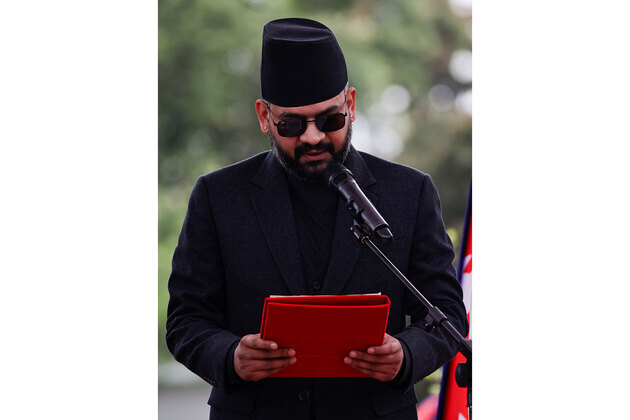
Kathmandu [Nepal], April 27 (ANI): One month into office, Nepal's 'super Prime Minister' Balendra Shah, popularly known as Balen, finds himself navigating a mix of high expectations, early reforms, and mounting controversies.
Backed by a near two-thirds majority in Parliament, Shah assumed office on March 27 following the March 5 elections that rode on the momentum of a Gen Z-driven political wave in the Himalayan Nation.
His rise had sparked optimism among young voters and reform advocates, many of whom saw in him a break from Nepal's traditional political establishment.
In his very first cabinet meeting, Shah moved swiftly to endorse an ambitious 100-point governance reform agenda.
The plan promised structural changes, including downsizing federal ministries, merging financially burdensome boards and committees, and depoliticising civil servants and teachers. It also envisioned citizen-centric service delivery--passports, licences, and citizenship documents delivered through the postal system.
Further proposals included implementing recommendations from a commission led by Gauri Bahadur Karki, reviving underperforming projects, digitising investment and industrial services, and preparing a long-term energy export strategy.
Yet, even as the blueprint signalled intent, the first month of governance has been overshadowed by turbulence.
Before completing 30 days in office, Shah's cabinet had already seen the exit of two ministers--raising questions about judgement and internal cohesion.
Nepal's Labour Minister Deepak Sah was recalled following controversy over appointing his spouse to the Health Insurance Board, while Home Minister Sudan Gurung resigned amid criticism over alleged links with a businessman under investigation.
'Recently, Home Minister Sudhan Gurung also resigned from the post. Within one month, two ministers have resigned from their posts. This has left the question: 'Aren't there any capable ministers who can take over the post from parliament?' This has left a question about who that capable minister is, and if there isn't, then why? Also remains unanswered,' Michael Tamang, a Gen Z voter, told ANI.
Among supporters, particularly the youth who powered his rise, the developments have triggered unease.
'Being a youth and Gen Z, I was quite hopeful when Balen Shah became the Prime Minister, but due to recent controversies, it seems like the government hasn't been performing well, and within the formation of less than one month, two ministers from the government have resigned,' Garima Shrestha, a Gen Z voter from Gorkha of Nepal, told ANI.
Controversies have not been limited to personnel decisions. The government's move to implement the Karki Commission report, linked to the Gen Z protests issued by the interim government under former Prime Minister Sushila Karki, without a clear legal grounding, drew criticism early on.
Similarly, the arrest of former Prime Minister KP Sharma Oli and former Home Minister Ramesh Lekhak without proper paperwork invited legal and political backlash, with courts ordering their release.
Nepali Congress leader Deepak Khadka was also freed after prolonged detention due to insufficient evidence.
Despite campaigning on transparency and accountability, Shah has maintained a notably low public profile, and neither addressed the nation nor held a press conference since taking office--an absence that has added to public curiosity and criticism.
His silence has been particularly noted in connection with allegations against his party chairman, Rabi Lamichhane, in cooperative scam cases.
At the same time, the ruling Rastriya Swatantra Party (RSP) has moved to amend provisions that would delay the disqualification of MPs until formal indictment--a move seen by critics as a protective measure for the people in power, which goes against the expectation of the youth who brought them in power.
Governance style, too, has come under scrutiny. Access to the Prime Minister's Office has reportedly become more restricted, requiring special arrangements, raising concerns about transparency and public accessibility.
Policy decisions have drawn mixed reactions. The introduction of a two-day weekend has been welcomed in some quarters but resisted by local governments and educational institutions struggling to adjust academic schedules.
On the economic front, the government's promise to create domestic employment opportunities--central to its political messaging--remains under watch.
'The government, until now, has been working quite well. As a youth myself, I have some expectations from the government - creating employment opportunities. There are a lot of youths flying abroad for employment. As the government (ruling RSP) in their manifesto had stated that they would lessen the number of youths going abroad for employment and instead create it here, until now, none of the significant steps have been taken in that area,' Sadikshya Shrestha, a Gen-Z voter from Lalitpur, told ANI.
Meanwhile, efforts to remove riverside squatters have sparked human rights concerns, with critics pointing to a lack of planning and humane rehabilitation measures.
Trade and cost-of-living issues have also surfaced. The tightening of regulations along the Nepal-India open border has triggered protests, while fuel prices remain high despite tax waivers, with the state-owned Nepal Oil Corporation increasing prices by around NPR 50 within a month.
Administrative reforms have shown some early signs of progress--such as accelerating the backlog in driving licence distribution--though not without complaints over quality.
Amid the mixed record, some citizens have pointed to incremental improvements in government functioning.
'We can see the government offices are open in early hours and close late in the afternoon, so it's a positive change that we really need to acknowledge and really need to be happy about,' Binayak Shumsher Thapa, a Gen Z youth from Kathmandu, told ANI.
In a symbolic departure from past diplomatic practices, Shah also opted for a collective meeting with ambassadors rather than traditional one-on-one engagements--hinting at a shift in approach.
For now, as Nepal's youngest political wave watches closely, Shah's government stands at a delicate juncture--its bold reform agenda intact on paper but its early credibility increasingly shaped by how it manages controversy, delivers on promises, and reconnects with public expectations. (ANI)



 Share
Share
 Tweet
Tweet
 Share
Share
 Flip
Flip
 Email
Email